
The UniteBoston team is going on a Journey Towards One by developing a framework around becoming truth learners, truth hearers, and truth tellers to address three big barriers to Christian unity: imbalanced theology, righteous hubris, and historical injustices. We believe UniteBoston’s unique role is to foster renewal by bringing the streams of Christianity together and shape “ambassadors of reconciliation” and repair (2 Corinthians 5:18-20) who can bear witness to the gospel individually and corporately. Ambassadors of reconciliation bring healing, repair and restoration to broken relationships between God, people, and creation towards shalom.
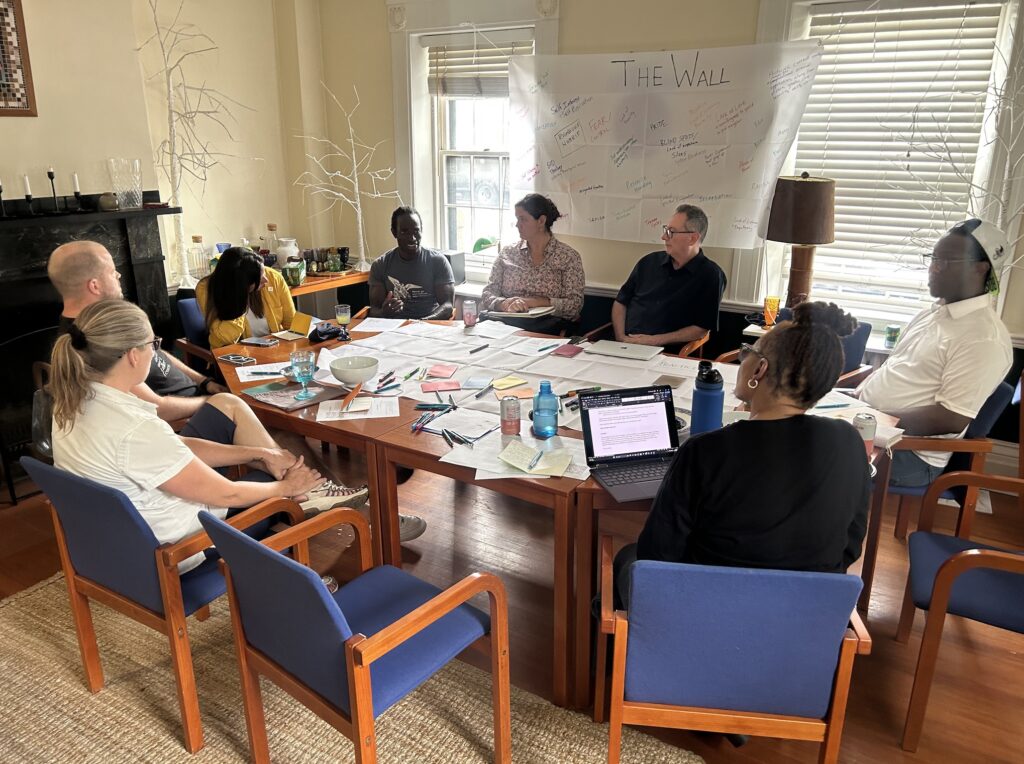
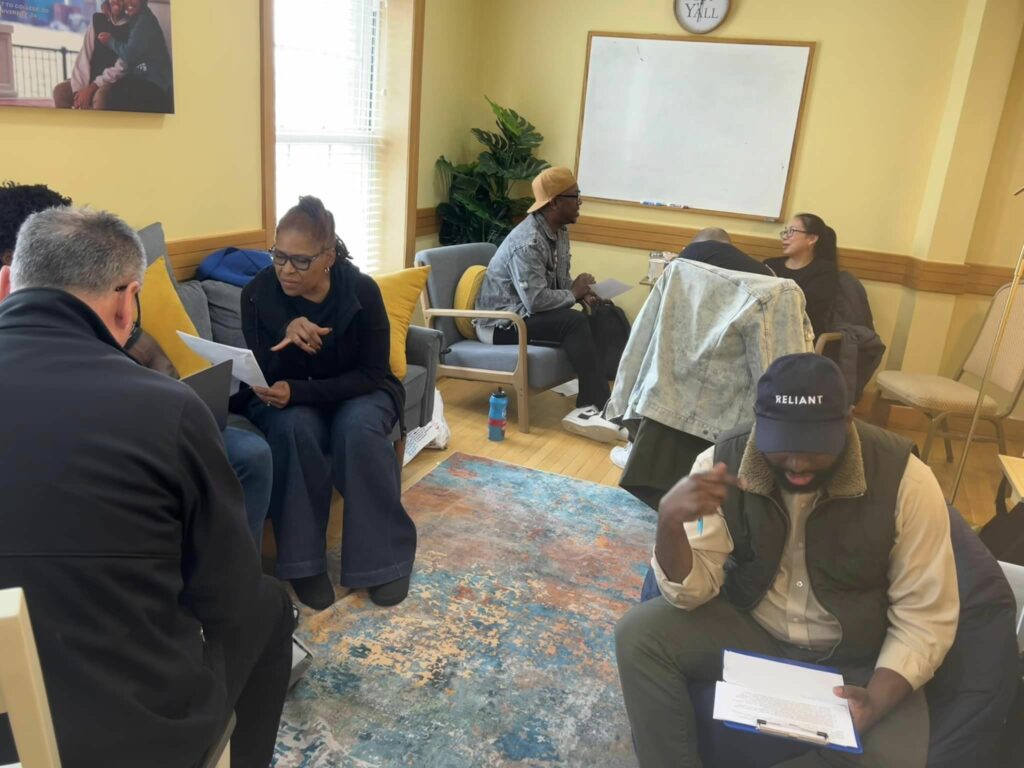
Our cohorts are integral to our journey towards unity. At UniteBoston, we understand that embodying the oneness Jesus calls Christians to goes beyond a surface level “oneness” that only speaks to our ‘unity in Christ.’ Rather, Biblical unity is “deep unity,” going towards the places of difference, divisions, and conflicts, to bring healing and repair, rather than avoiding them or focusing on what we all have in common. Reconciling people to God and one another is profound work that involves truth-telling and restoring relationships. While UniteBoston will still host occasional large gatherings, our primary focus is cultivating “ambassadors of reconciliation” through smaller, diverse cohorts of Christian leaders.
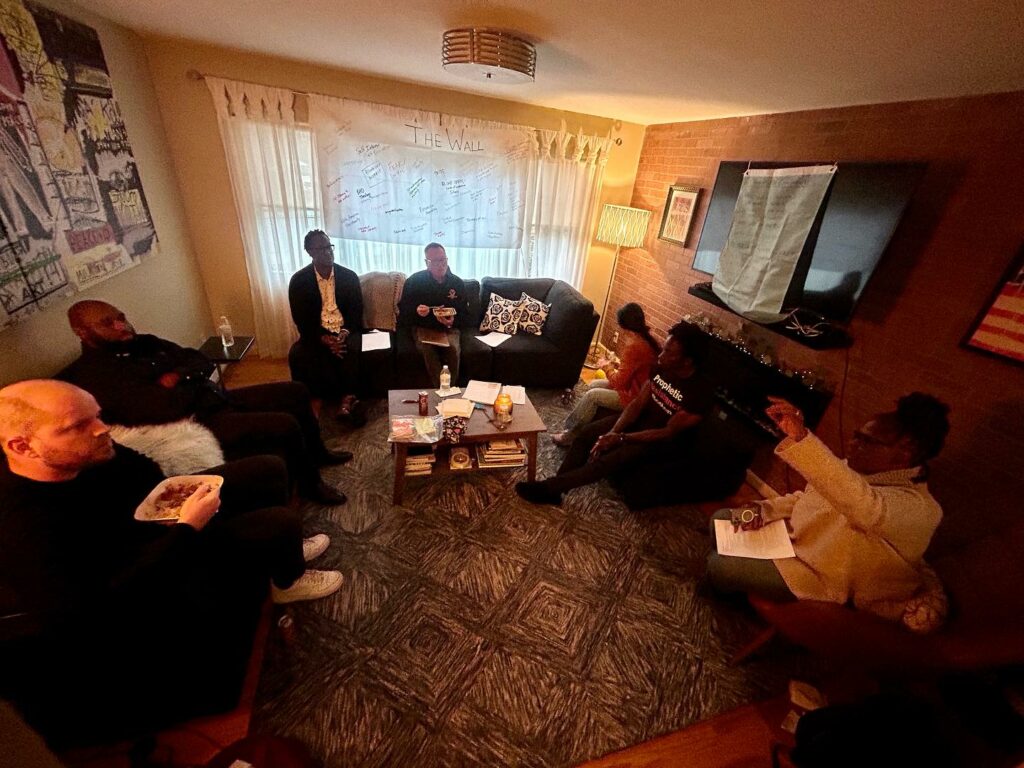
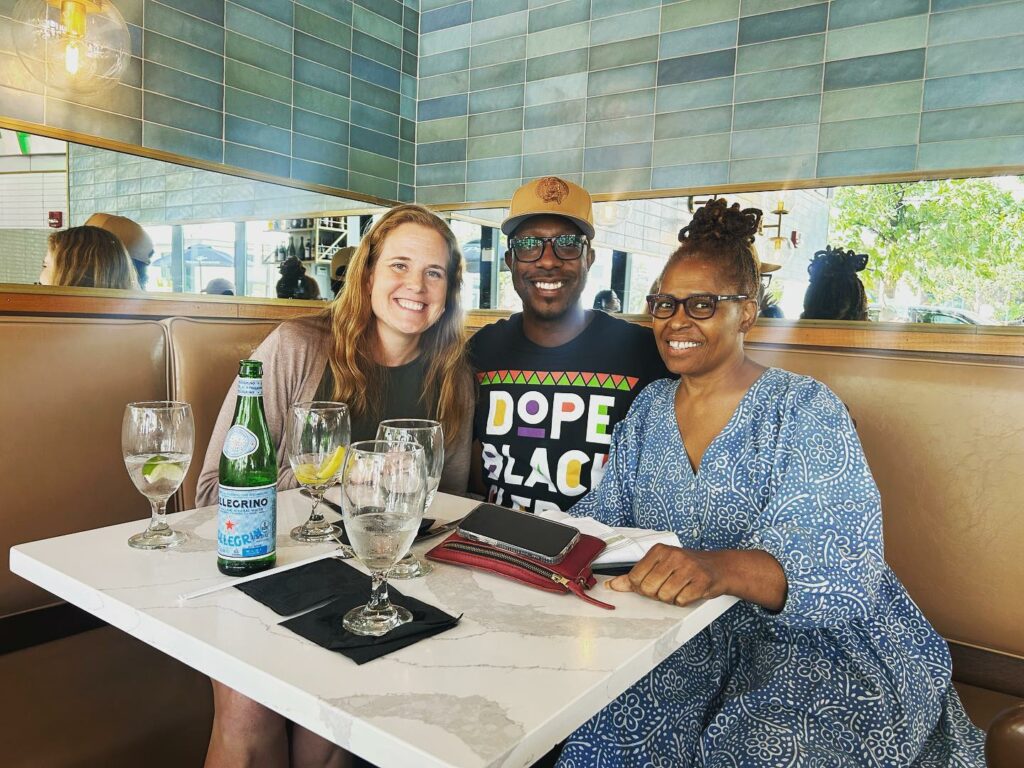
This year, we are grateful to be journeying with three cohorts: the Sankofa Journey Cohort, which explores Boston’s history of racism and the path toward truth-telling and repair; the Beloved Community Lab Cohort, which equips leaders to practice unity, justice, and reconciliation in their respective contexts; and the Church & Civic Engagement Pastors’ Cohort, which gathers local pastors to engage some of the most pressing social and political challenges of our time. Together, these groups reflect our conviction that if we want to see a different kind of world, we must become a different kind of people.


Despite Jesus’ clear mandate for unity and welcoming all to the table, churches remain some of the most divided institutions in our society. With over 45,000 Christian denominations and countless divides over race, gender, theology, and politics, the Church’s fractured witness stands in stark contrast to Jesus’ prayer that we would be one (John 17).
A team of diverse Christian leaders in Boston recognized this gap and came together to ask:
What kind of discipleship is needed to form leaders who uphold God’s call for unity and oneness in today’s world?
Through prayer, study, and listening, UniteBoston has been on a two-year journey of developing the Beloved Community Lab, a unique opportunity for Boston-area Christian leaders to come together across lines of difference to learn and practice unity, justice, and reconciliation in their leadership contexts.
We call this a “lab” because it combines core theological concepts with real-world application through case studies, interactive exercises, and spiritual practices. This cohort is a space for spiritual formation—shaping leaders into peacemakers and reconcilers, growing into the life and way of Jesus.
The things that are keeping us part are deep-rooted: we need a vision of togetherness that doesn’t only lean into our differences but also brings about holistic gospel transformation. If we want to see a different kind of world and a more embodied Christian witness, we must become different kinds of people. Our pilot Beloved Community Lab cohort is an experiment in Christian unity that seeks to change not just what we know, but how we live.

Sankofa, a Ghanaian term from the Akan people meaning “to go back and get it,” conveys the need to learn from the past in order to shape a more faithful and just future. The legacy of racial division and slavery continues to impact our city interpersonally, institutionally, and systemically. It is a wound whose oppressive impacts prevent flourishing for many Boston residents; yet many do not see or acknowledge the problem. All too often, the Bible has been used to justify the sin of racism. To not talk about this history allows sin to fester, further dividing the body of Christ and distorting the Christian witness.
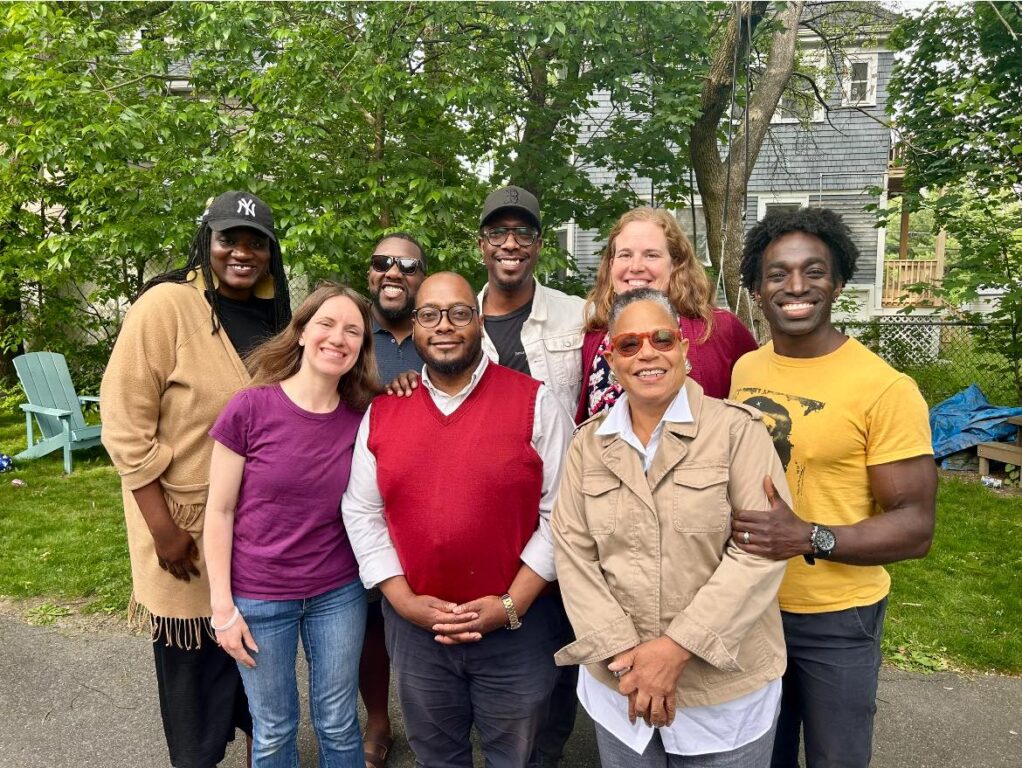
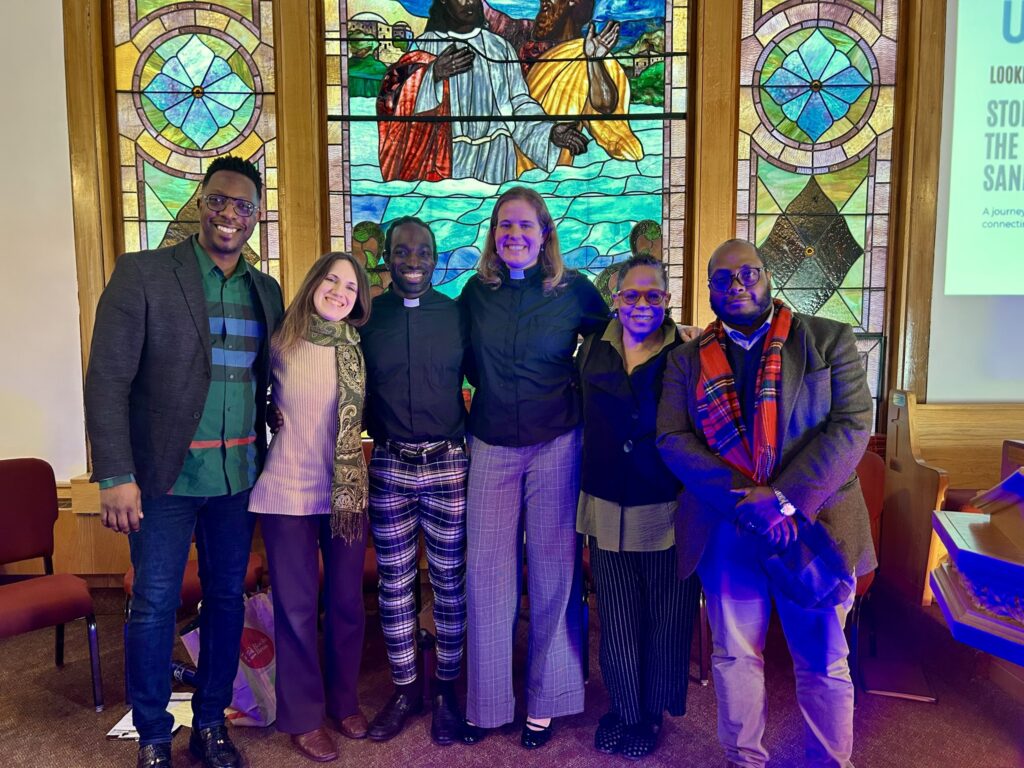
One step towards healing and repair is truth-telling. We must understand and confess the mistakes of our past—the sin of racism and its impacts—in order to pave the way forward. This working group is exploring the history of racism in Boston and discovering what might be done to “reconstruct” a common memory for Christians in Boston. They are journeying together as a community of learners and practitioners to share personal stories, explore the history, interview local experts, and discern gaps.
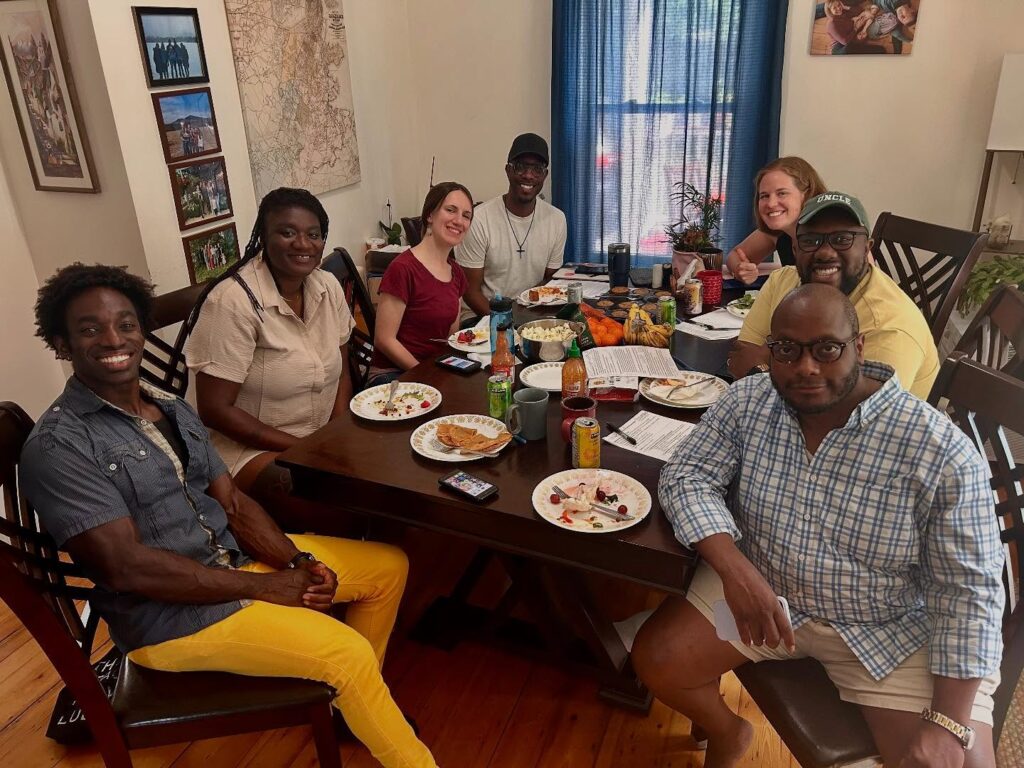
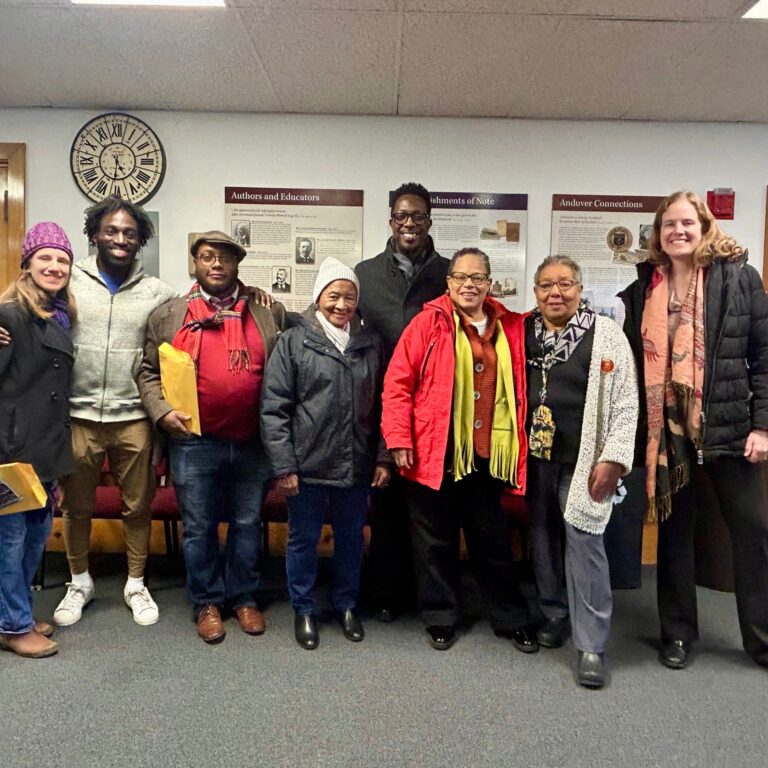
In its first year, our cohort mapped and visited key sites tied to the legacy of slavery in Boston, engaging as a community of learners and practitioners. Together, we explored places such as the Embrace Memorial, Old South Meeting House, Harvard’s Legacy of Slavery Tour, Shirley Eustis House, Myrtle Baptist Church, Jackson Homestead, and a presentation on the Hidden History of Black Boston. Each visit was paired with shared meals and reflective dialogue, creating space to grapple with untold histories often left out of mainstream narratives. Along the way, we confronted how many of Boston’s institutions—including churches—were built on the backs of enslaved people and how Scripture was misused to justify oppression, fostering a deeper reckoning with this painful but necessary history.
Now in its second year, this cohort has expanded to include two additional cohort members.
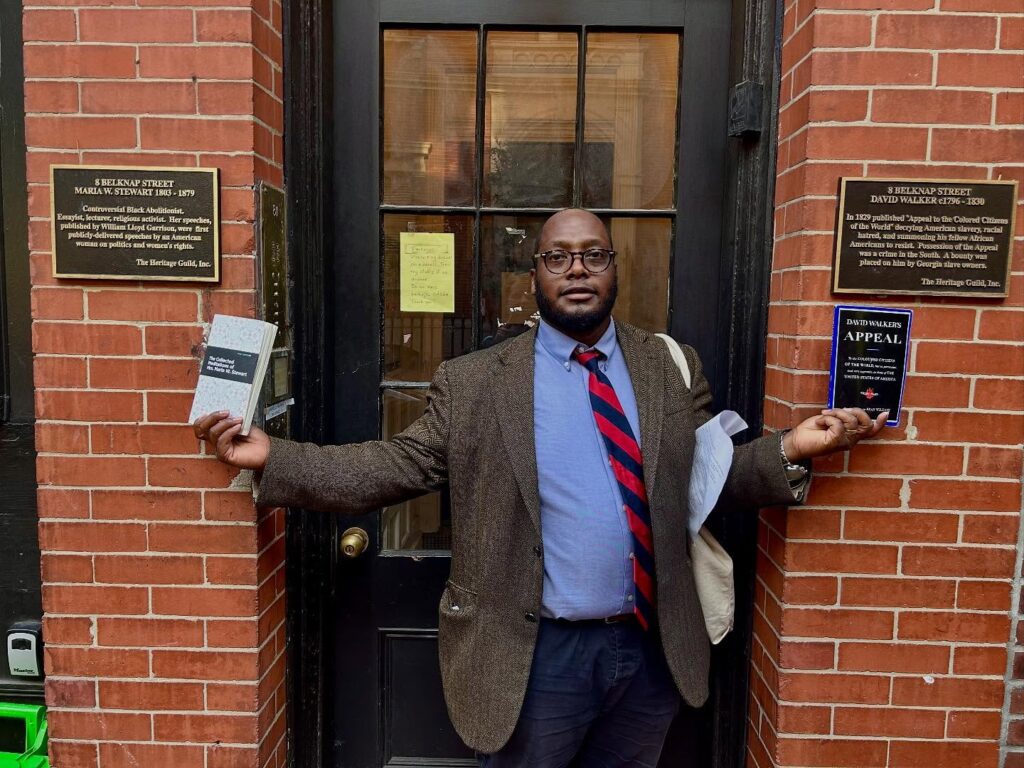


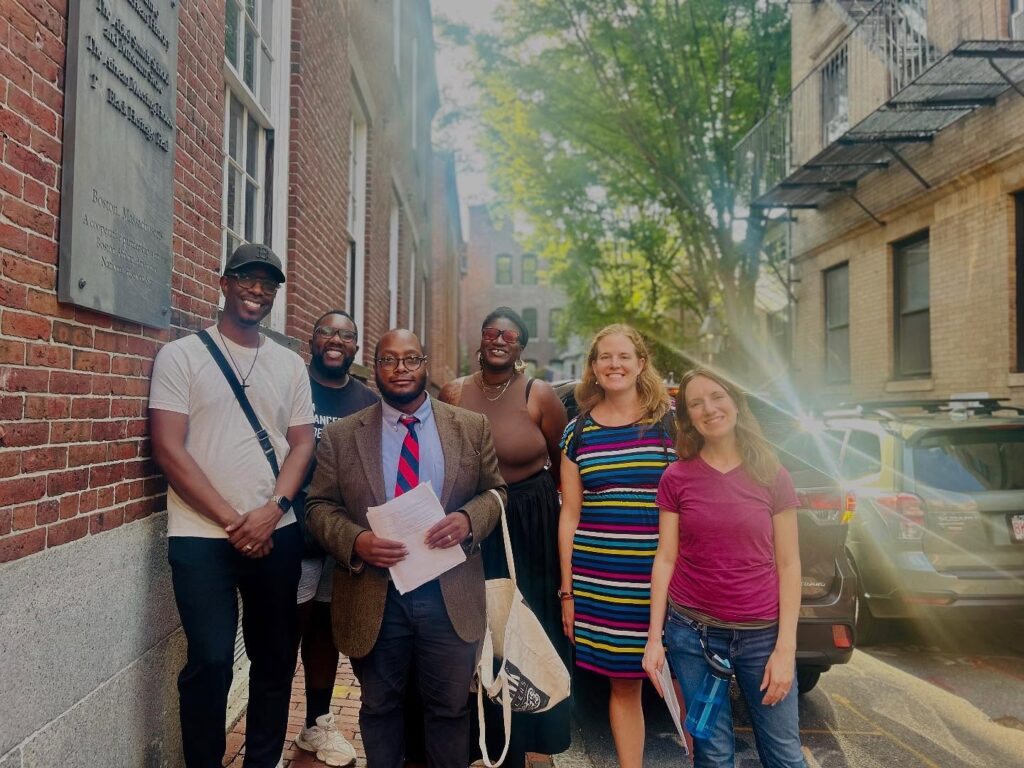
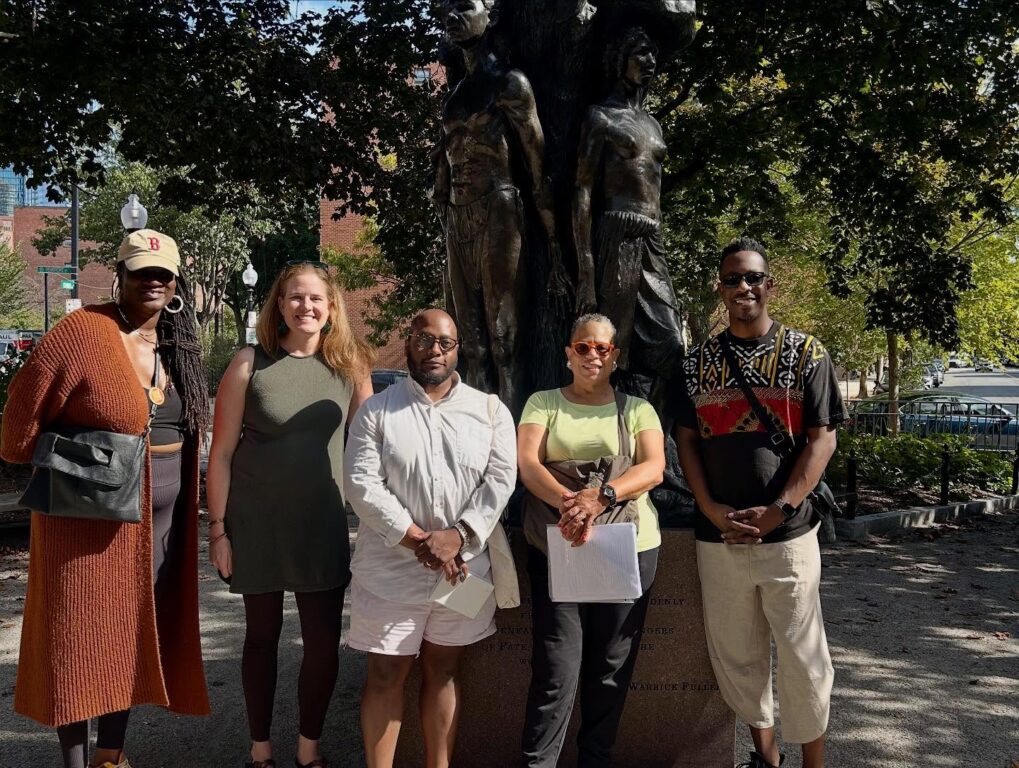
In August 2025, our Boston Sankofa Journey cohort walked the streets of Beacon Hill for a tour of Black abolitionist history, led by our team member and educator Geoffrey Hicks. Geoffrey told us, “I literally feel like I am introducing you to my friends”—and that’s exactly how it felt as he shared the stories of people who’s courage shaped Boston’s legacy of freedom. We stood at the African Meeting House, the oldest Black church in the U.S., where resistance to slavery was preached as core to the gospel. We heard Maria Stewart’s prophetic call for women to rise up, and David Walker’s fiery Appeal that demanded dignity and freedom—so bold it carried a bounty on his life. This was not a sanitized, “kumbaya” history. It was a reminder of the Black community that once pulsed with vitality and resistance in Beacon Hill, a people who risked everything to faithfully follow Jesus to bend the arc toward justice.
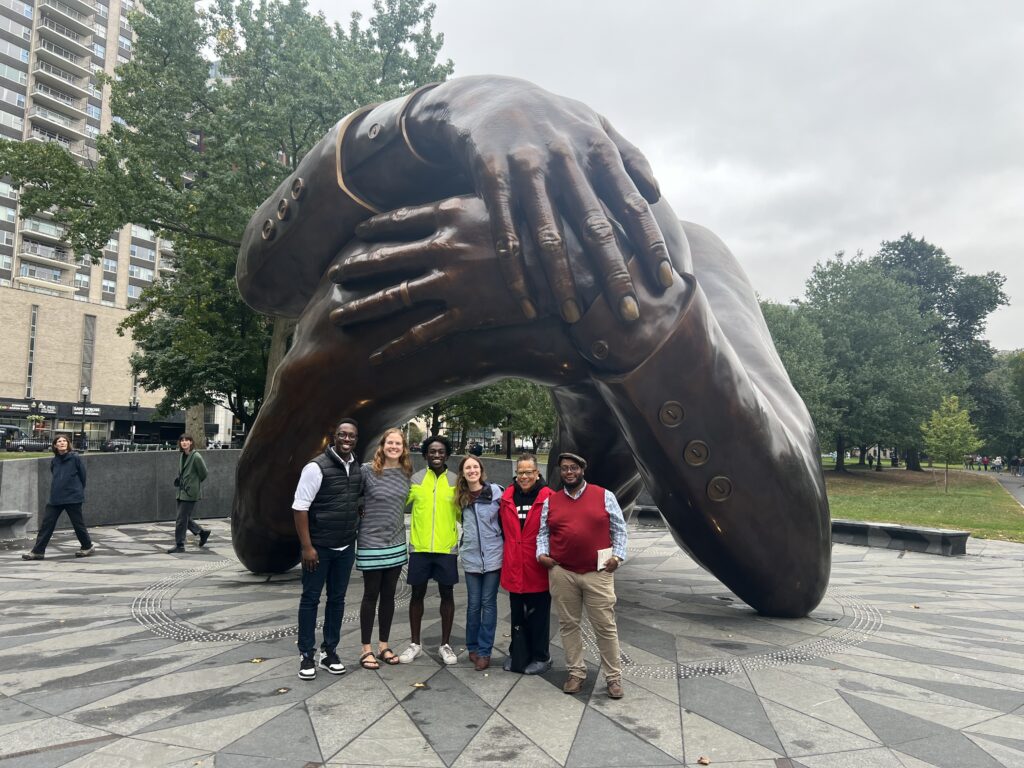

Learn more about Boston’s Black History Here!
The Boston Sankofa Journey is leaning into this work alongside many other Boston-area congregations and organizations confronting their ties to the slave economy.
We recommend the following initiatives led by current and past Boston Sankofa journey cohort members:
- Race & Christian Community Initiative at the Emmanuel Gospel Center led by Megan Lietz, which equips the Church to continue Christ’s reconciling work in race relations. Megan is leading a 6-week workshop series starting October 30 called Towards Shalom with Biblical and Theological foundations for addressing racism today.
- Episcopal City Mission, which builds relationships and collective power across the Commonwealth of Massachusetts for racial and economic justice as an expression of God’s transforming love.
- Harvard and the Landscape of Slavery Guided Tours which makes space for reflection, ritual, silence, slowing down, and honoring the difficult truths of the legacy of slavery in our educational institutions led by former UB Board member Rev. Rita Powell.
- Arrabon, which equips Christ-followers to pursue healing and reconciliation in their communities, offers a wealth of resources and experiential learning opportunities on racial reconciliation and justice
- June Cooper, the Theologian in the City at Old South Church, is co-hosting a Civil Rights Pilgrimage: Searching for Truth & Justice in the Deep South in March 2026
Sankofa In the News
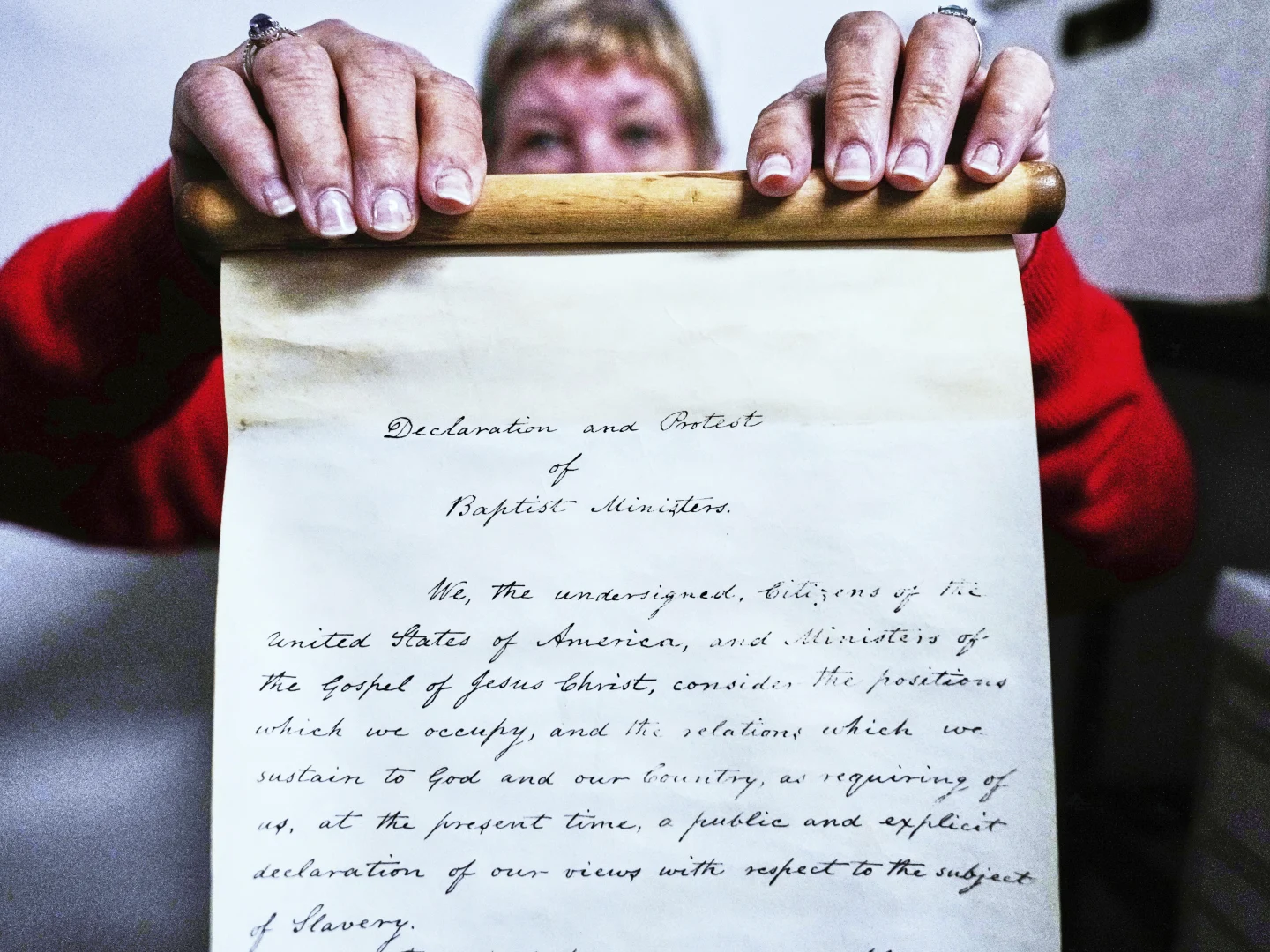
May 2025 brought the rediscovery of a long-lost 1847 declaration, A Resolution and Protest Against Slavery, signed by 116 New England Baptist pastors. Hidden for more than a century, this document gives witness to faith leaders who spoke courageously against slavery in their time. The document explains why the ministers “disapprove and abhor the system of American slavery.”

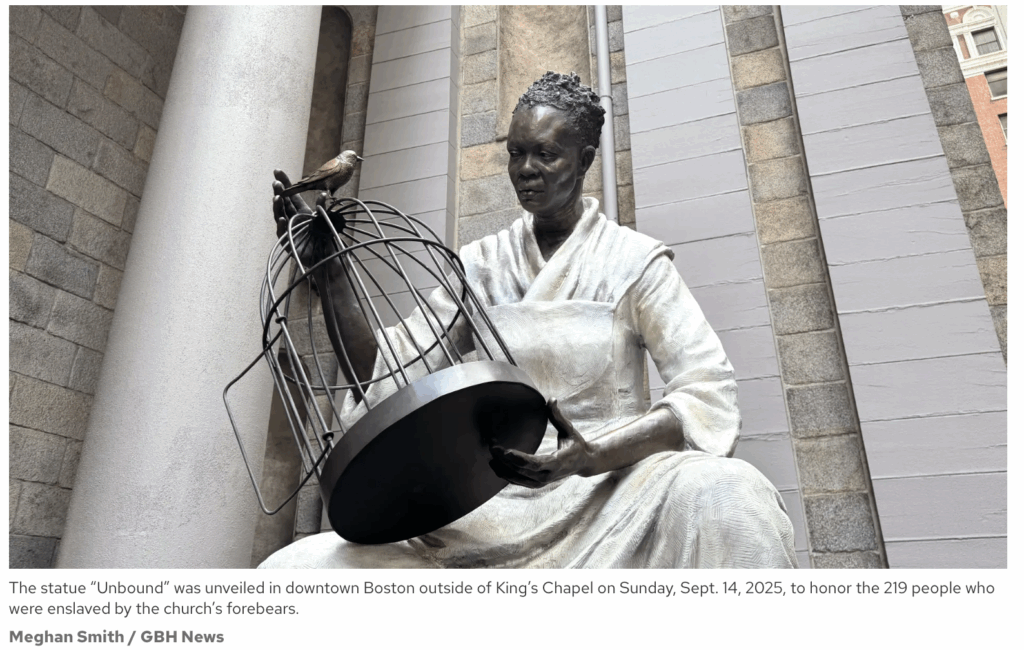
In September 2025, King’s Chapel unveiled Unbound, a monumental new sculpture of a Black woman holding a metal cage where the birds fly free. The sculpture honors 219 women, men, and children enslaved by past ministers and members. This memorial—ten years in the making—is a powerful act of remembrance and repentance, inviting Bostonians and Christians to reckon with complicity in slavery and to imagine a more just future.
We celebrate a gathering that took place in November 2025 hosted by Episcopal City Mission entitled: “A Reparations Summit: An Episcopal Call to Moral Witness & Action.” Click above to watch the morning session, including personal testimonies on the work of repair and a keynote talk by Rev. Dr. Kelly Brown Douglas on the theological case for reparations based in Isaiah 58:12.
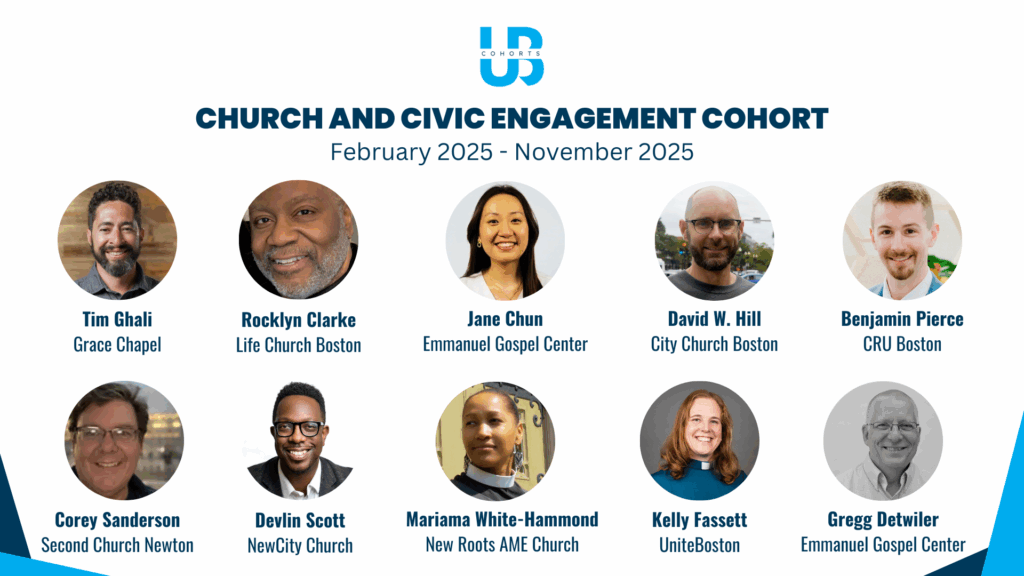
The Church & Civic Engagement Cohort was born out of UniteBoston’s Church & Civic Engagement Gathering in October 2024, held just before the US presidential election. That evening meal and conversation drew together pastors and Christian leaders from across the city to reflect on what it means to lead faithfully in a polarized time. Building on that gathering, this ongoing cohort provides a sacred space for pastors to resist isolation, share their ministerial experiences, and prayerfully reflect on faithful church and civic engagement.
Together, we seek to push back on despair and lean into hope, trusting that God is present in our shared work. Our time is marked by honest dialogue, where we practice a generous orthodoxy that holds firm to central Christian convictions while making room for diverse perspectives. Guided by the Wesleyan Quadrilateral of Scripture, tradition, reason, and experience, we discern together how to meet this civic moment as beloved image-bearers called to build and repair the world in love.
In a cultural moment often defined by division, loneliness, and heavy pastoral burdens, this cohort stands as a counter-witness. It reminds us that ministry is not meant to be done alone and that, with God’s help, we can step into public and civic life not as partisan actors, but as faithful agents of justice, mercy, and peace.
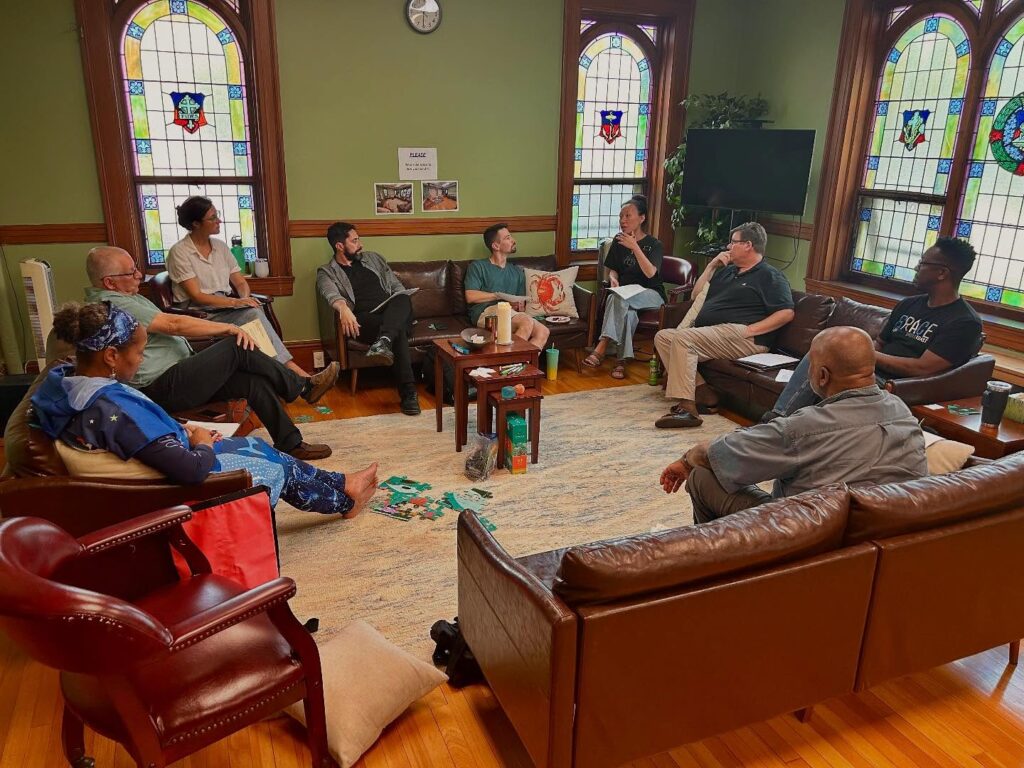

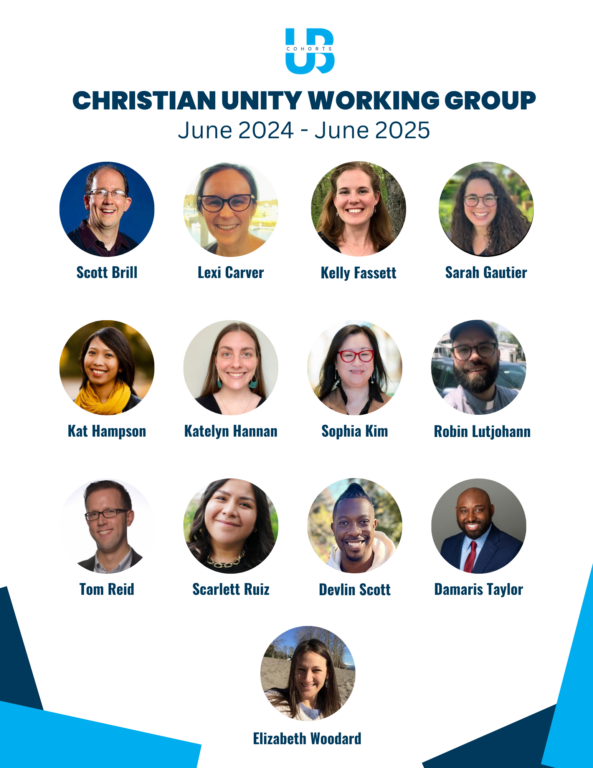
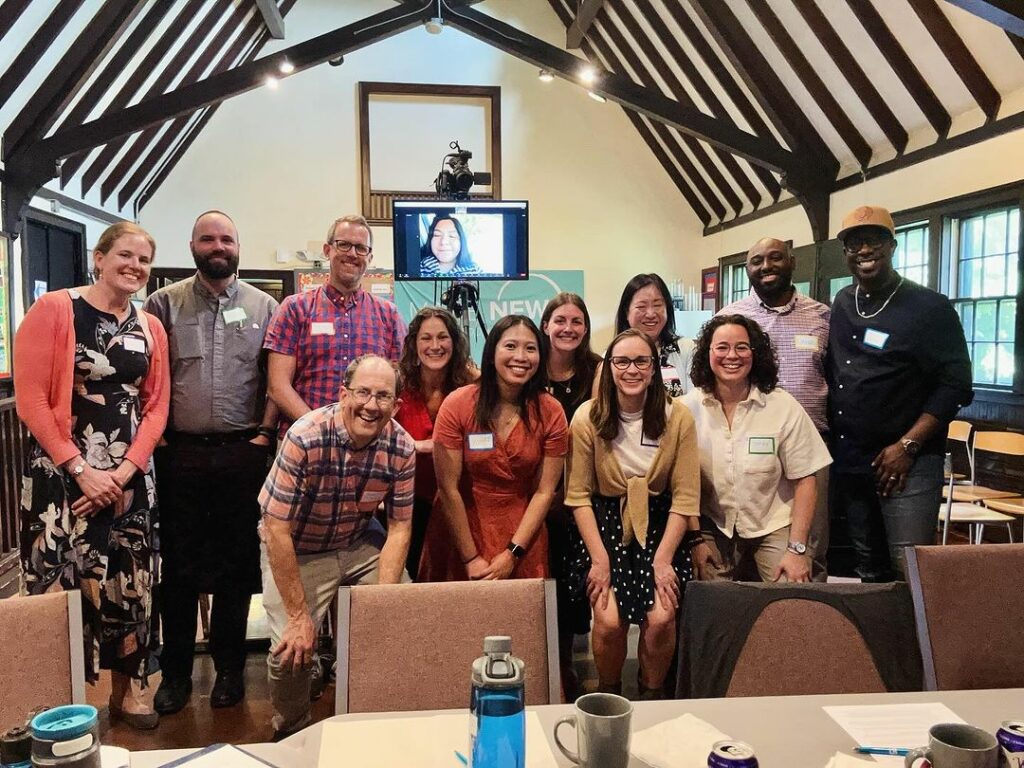
A year ago, a group of thirteen Christian leaders gathered under the shared hope of building something that could help the Church become more whole. Month by month, conversation by conversation, they began co-creating a discipleship experience for those longing to see reconciliation in the Church and in the world. Their time together birthed what is now called the Beloved Community Lab—a hands-on, holistic curriculum designed to equip Christian leaders to come together across lines of difference and live out unity, justice, and reconciliation in their leadership contexts.
The group met monthly, bringing their full selves to the table. Their gatherings were marked by deep, vulnerable conversations—full of prayer, laughter, and the hard, necessary work of reckoning with the barriers that keep us from living out the oneness Jesus prays for. One especially powerful moment came during a case study that explored tensions between the Church and the LGBTQIA+ community. The group examined two parallel narratives: one naming the harm and righteous hubris often perpetuated by the Church, and the other acknowledging the pain and posture of resistance within parts of the queer community. It was a conversation that demanded both courage and humility, modeling the kind of truth-with-compassion posture that reflects the heart of Christ.
Through these kinds of rich and formative dialogues, the cohort developed a curriculum rooted in holistic spiritual formation—combining theological reflection, spiritual practices, and real-world application. Core areas of focus included:
- Defining the principles and practices of Christian unity, while confronting barriers such as imbalanced theology and righteous hubris
- Embracing Christian unity as a daily way of life in relationship with neighbors, friends, and coworkers
- Modeling beloved community by resisting societal division and embodying the gospel through self-giving love
Today, we are honored to take their faithful work and pilot the Beloved Community Lab with a new cohort of leaders, continuing the journey they began and inviting others to learn, practice, and lead with a vision for a more unified and reconciled Church.
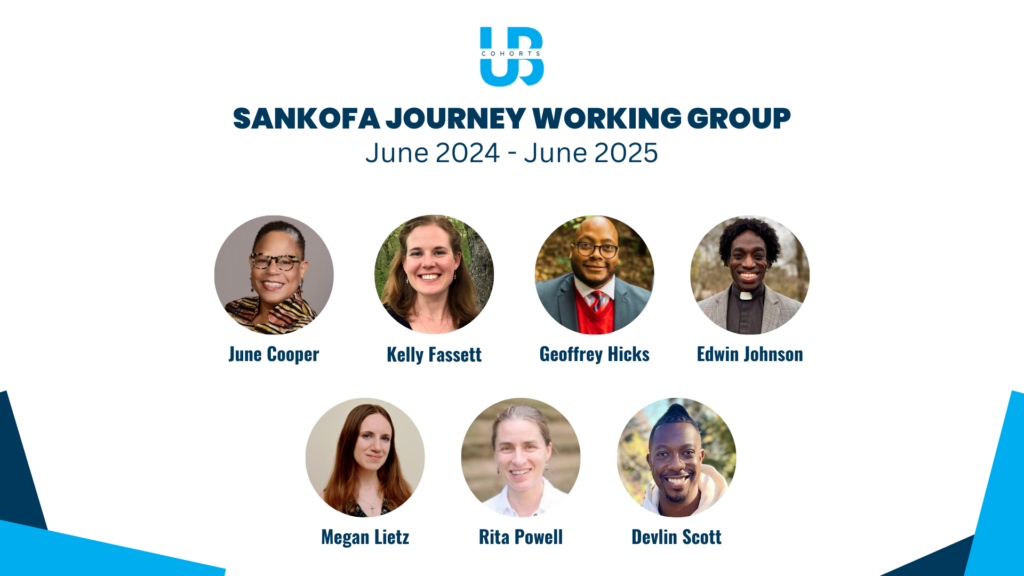
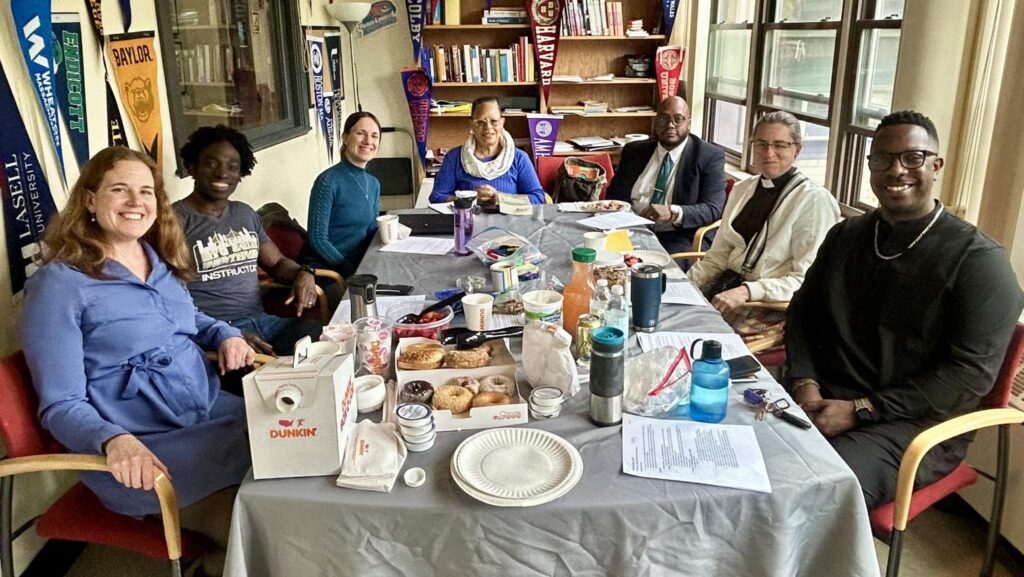
Participants: Kelly Fassett, Edwin Johnson, Megan Lietz, June Cooper, Geoffrey Hicks, Rita Powell, and Devlin Scott
Our Boston Sankofa Journey began in 2024 – together we visited ten historical sites in the city seeking to understand and confess the mistakes of our past—the sin of racism and its impacts—in order to pave the way forward. We journeyed as a community of learners and practitioners, sharing personal stories, examining history, interviewing local experts, and identifying gaps. Their work laid the foundation for the Boston Sankofa Journey, a discipleship learning pathway designed to bring together resources so that individuals and communities could take steps towards learning, truth-telling, and repair. Now in its second year, the cohort continues to foster a greater sense of historical consciousness and racial repair, carrying forward the vision of truth-telling and shalom in Boston.
Christian Unity in the City Cohort: June 2023 to June 2024
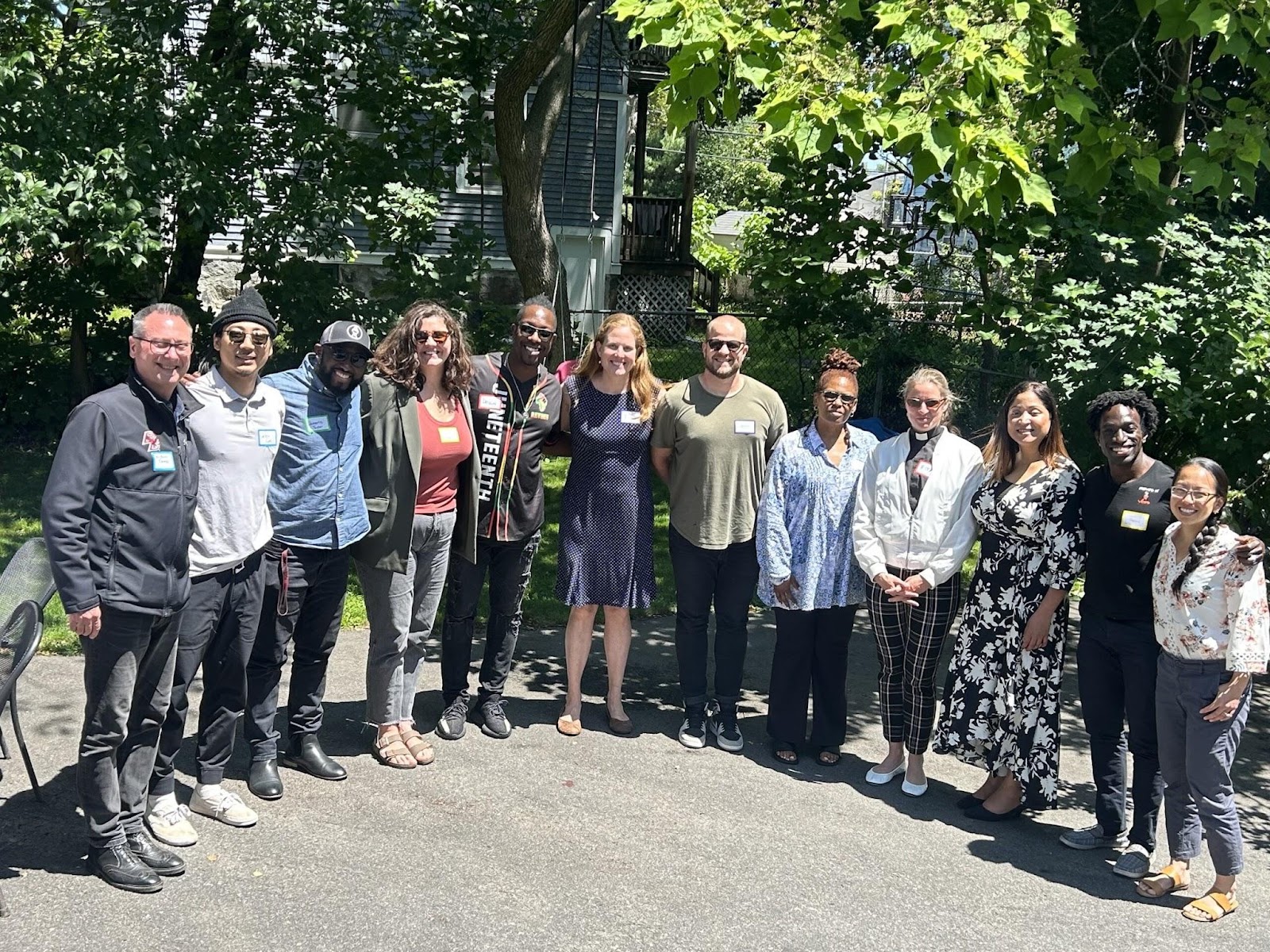
Participants – From left to right: Michael James, Calvin Lee, Damaris Taylor, Jamie Mangiamelli, Devlin Scott, Kelly Fassett, Josh Wilson, Valerie Copeland, Rita Powell, Carolina de Jesus, Edwin Johnson, Kaitlin Ho Givens
This group of leaders courageously shared their stories of how they have experienced unity and disunity in the church and sought to understand how people are living out God’s call towards unity, justice and reconciliation. How can we embody and witness to the reality of the walls being torn down? What can we do to keep these walls of hostility from emerging? How can we bear witness to God’s shalom more fully?
Photos from our closing retreat:
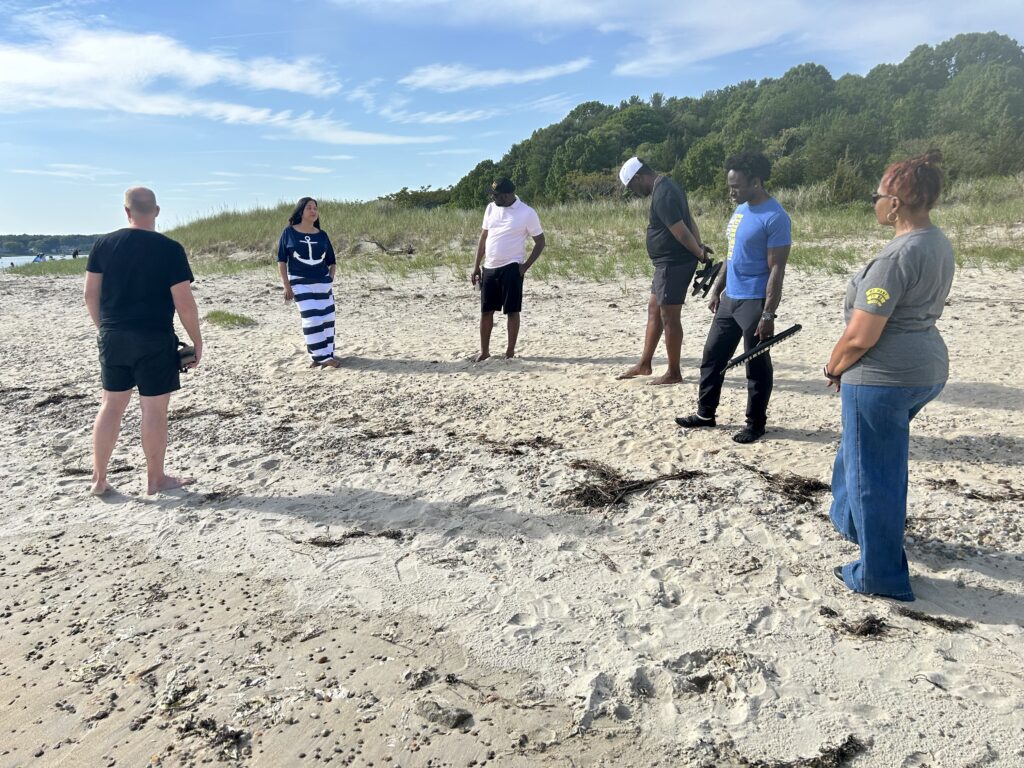
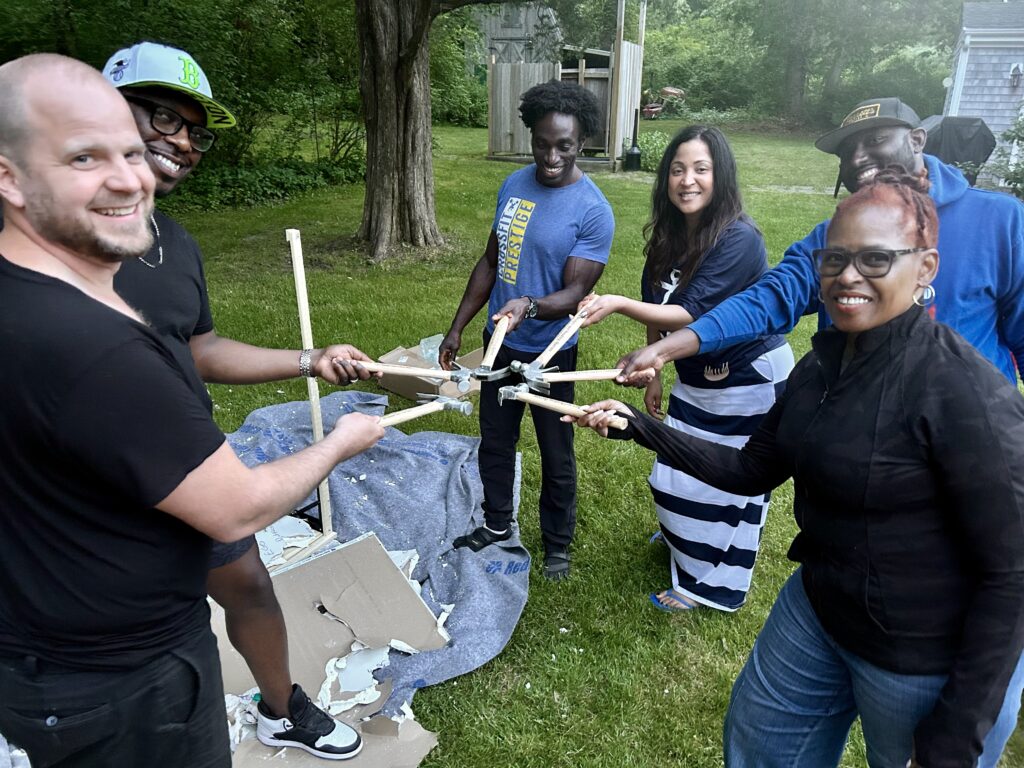
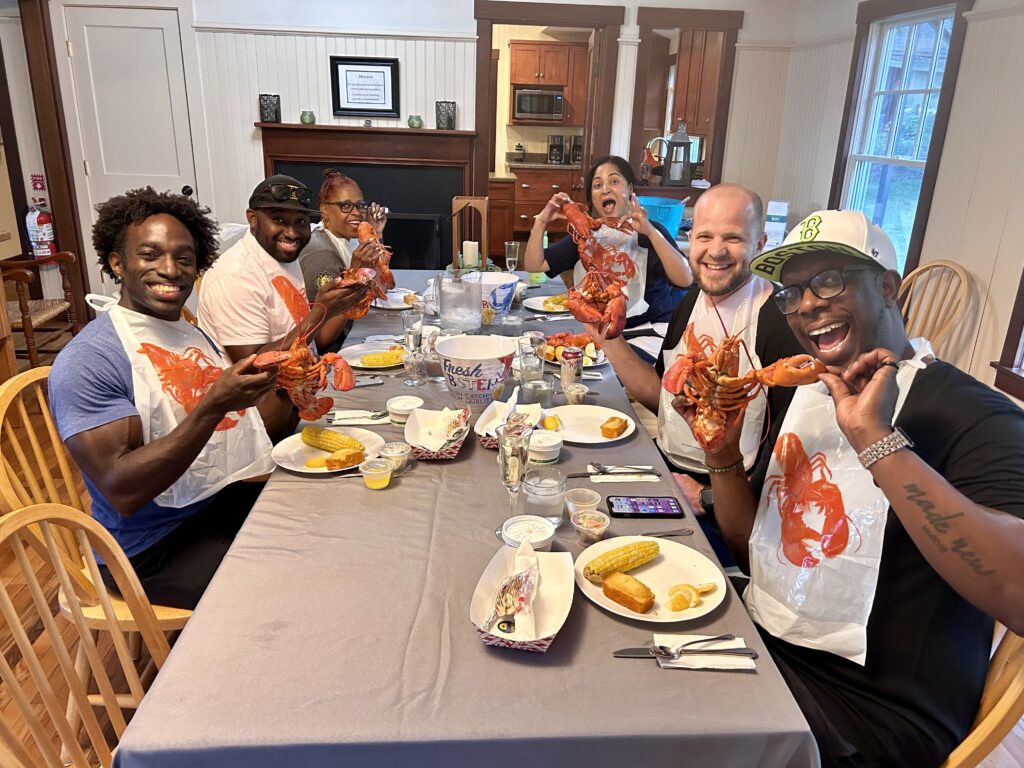
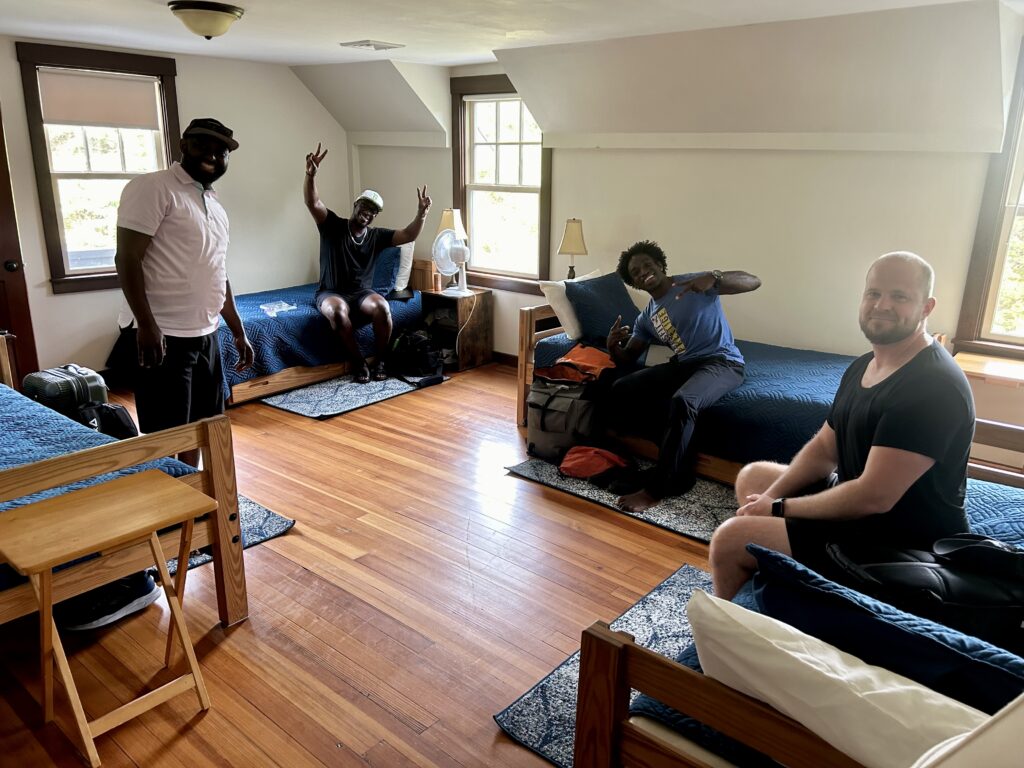
“Our journey this year has been a little bit like the road to Emmaus. That is, our gatherings have always been very rich and meaningful, a part of my walk this year, but like the disciples, it’s almost like as it comes to an end I see more clearly the presence of Christ in that walk together. The simple acts of gathering, sharing meals, and sharing stories might be some of the most important work that happened this year. I’m grateful to each member of the cohort and to Unite Boston for convening and holding such a gospel space.” – Rev. Rita Powell, Episcopal Chaplain at Harvard Divinity School
“What a gift to be led by Devlin, Kelly, and Pastor Val! It has been a joy to meet with other Christian leaders in the city and trace the lines of unity that bind us together.” – Pastor Kaitlin Ho Givens
“The individuals in our cohort are all so different; culturally, liturgically, and theologically. But as I’ve listened to the stories of God’s movement in the lives of each of these new friends, I’ve been awed by just how much we have in common: a love for Jesus, a devotion to his church, wounds in need of healing, a deep longing for the Kingdom, along with a lot of courage and faith. This journey and these people have reinforced my commitment to move from curiosity, my belief that we have so much to learn from each other, and my hope that the chasms that divide us can be bridged.” -Josh Wilson, Pastor at Reality Boston
“If the seed of Christian unity is our faith in Jesus, and the sunlight/water are our opportunities for joint ministry and mission, then the soil is most certainly our relationship and engagement with each other. The soil is aerated by our whole-hearted leaning into difference and disagreement with love. We are truly stronger together” – Edwin Johnson, Director of Organizing at Episcopal City Mission
“As a Roman Catholic, I am reminded that the Catholic Church made a fundamental shift in its vision of Christian Unity from Vatican I to Vatican II, moving from an ecumenism of “return” to an ecumenism of “recognition” – the recognition of an esteem for the many gifts of God’s Spirit that reflect a genuine communion of faith and life with other Christian churches. As a result of the journey that we have shared in our Christian Unity cohort, I am convinced that the personal and relational always come before the structural and institutional. Journeying out of our isolations; meeting, sharing meals, sharing our stories, getting to know and trust one another; establishing friendships— these cohort experiences of relationship form the climate in which both individual Christians and separated communities become open to, recognize and receive gifts of the Holy Spirit from one another. It is this kind of climate that I have witnessed with our Unity Cohort from which a passion for unity is cultivated and sustained. Symbolic gestures are important among church leaders, but relationships of trust and mutual affection have to grow among members of different churches as well if receptive ecumenism is to flourish.” -Michael James, Resident Minister and Faculty Member at Boston College
“In the Christian unity cohort, I found that our differences didn’t divide us; rather they made us connect more intentionally as we built friendships with one another. We don’t have to agree on all the things, but we can accept, love, and serve one another just like Jesus loved and served us.” -Carolina de Jesus, Chief Executive Officer at the Boston Higher Education Resource Center
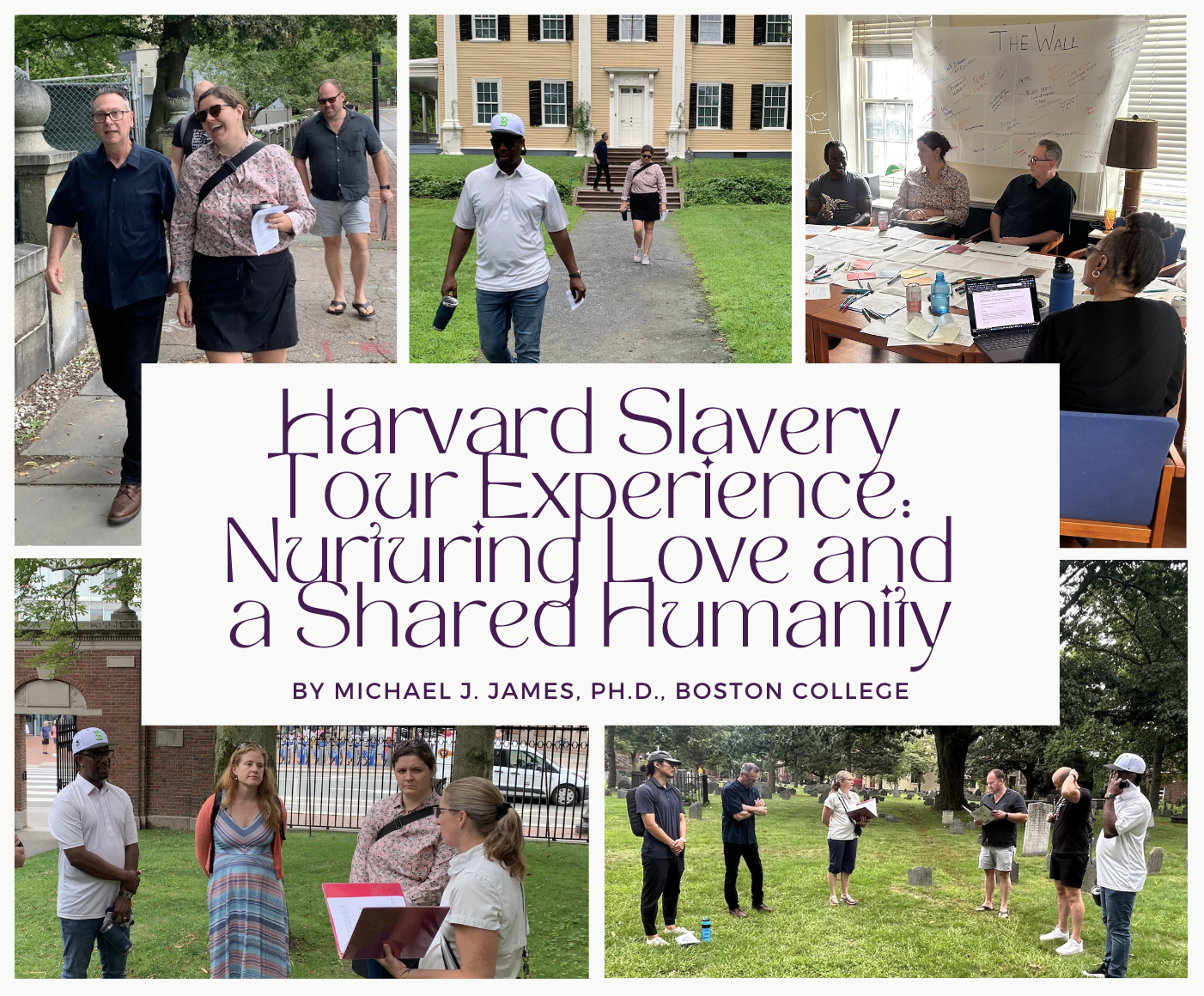
Our Christian unity cohort went on the Harvard Legacy of Slavery Tour which explores how the institution of Harvard has built on the legacy of slavery. Click on the image above to read Dr. Michael James’ blog, where he shares how his experience during the renewed his commitment to building unity through the “art of loving.”
Class of 2024
Michael James
Calvin Lee
Damaris Taylor
Jamie Mangiamelli
Devlin Scott
Kelly Fassett
Josh Wilson
Valerie Copeland
Rita Powell
Carolina de Jesus
Edwin Johnson
Kaitlin Ho Givens
Class of 2025
Scott Brill
Lexi Carver
Sarah Gautier
Kat Hampson
Katelyn Hannan
Jihyon Sophia Kim
Robin Lutjohann
Tom Reid
Scarlett Ruiz
Damaris Taylor
Elizabeth Woodard
June Cooper